
To A World At War
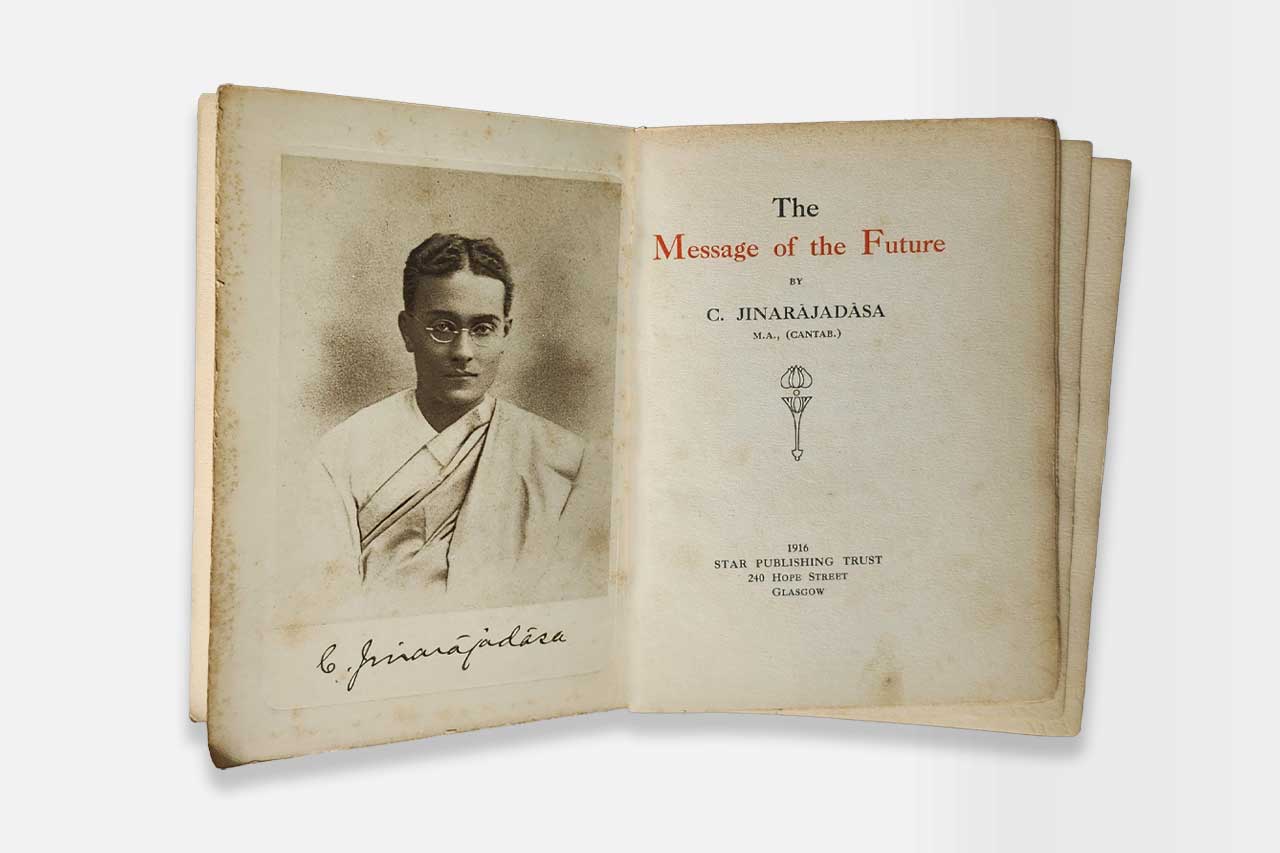
Reading Time: 20 minutesChapter 1 of The Message of the Future by C. Jinarājadāsa (1916)1.
Lecture delivered in London, July 7, 1916.
I have purposely put down as the title of my subject “The World-Teacher’s Message to a World at War;” the Order of the Star in the East believes in the coming of a great World-Teacher, and its members hope in their own lives that they may to some extent be the precursors of His coming. With that in hope, then, we have certain wisdom to give, and therefore it is that we think we can say what would be the great World-Teacher’s message, were He with us now, to a world at War.
Now the first question that we all need to ask ourselves is, “Why should the world be at War?”
Now the first question that we all need to ask ourselves is, “Why should the world be at War?” You will find that the answer to that is, as a matter of fact, a far deeper thing than people realise. Most people give the answer, “It is due to the ambitions of various rulers; the world is at war because of the actions of people who aim at world supremacy; the war is due to the greed of capitalists,” and, as you all are aware, we assign the blame for the outbreak of the war to one particular ruler. But twenty-seven years ago, when I first came to England as a boy, I remember my elders then talking of the great European war; I remember them saying, “The great war will break out from Austria,” and for over a quarter of a century I have been watching for that event. Everyone saw that the war would come; yet how is it that for twenty-five years at least—it is more than that really, since, indeed, the ending of the Franco-German War—though everyone saw that the world would be at war, yet no statesman, no ruler, no religious teacher was able to prevent the coming of the war? So, I want to explain to you another view of these events concerning the wars that have happened in history, and how, if we understand, we may bring about a civilisation that is without war.
Ma (間)
In Japanese aesthetics, Ma is negative space that gives shape to the whole.
An interval. A pause. A breath.
In music, it is the silence between notes that defines the melody.
In architecture, it is the openness that makes a room livable.
This space is not empty. It is a place for you to slow down and reflect.
The first great fundamental fact is that man is a soul, though he has a body; that the world is of matter, but it is also of Spirit; and that if we see this duality in the world, as we all feel it in our own lives, we shall begin to realise that there ensues, so long as there persists this duality, a certain struggle. It is the attempt on the part of the soul to dominate the body, and on the part of the Spirit to impose its Will on matter. The second great fact is that there is an opening Life, unlimited, full of power, in and through all things. In this mysterious universe in which we live this opening Life is striving always after a greater self-realisation, and that striving is the whole history of civilisation.
Now let us watch the striving of the great World Spirit throughout the ages, from its commencement in the life of the savage. The savage is descended from the brute as regards his body; he feels instinctively in every atom of his body the law of the brute, the survival of the fittest and the struggle for existence; we find that the savage, at his earliest stage, is hardly to be distinguished from the animal. The savage slays the animal for food and because he fears it; the life of the savage has the higher possibilities, and, as the World Spirit reveals itself, the animal life with the lower possibilities gives way. The war between the savage and the brute means advancement; and that is the first stage. But now comes a second stage, when there dawns another phase of the great World Spirit’s self-realisation; the savage has then imposed upon him from without a law and order which makes him an individual of a family. He is now no longer an individual savage fighting for himself; he is the head of a family, and he slays the animal for his dependants also. Because he has a wife and children he is forced to limit his individual liberty; he cannot go and slay at will those of his own family, he must, on the other hand, protect them. The lesson of selflessness is imposed upon him from without. But he still slays his enemy outside the family; yet, in spite of his slaughter, there is in his environment something of a higher life, for he realises that the coming together of the family means saving of labour, and that there is also more time for him to play. Then we have civilisation passing on to further stages till the individual families are organised into tribes. That means the restriction of the liberty of the family, but it also means the welfare and the gain of the tribe as a whole. We have the next stage, when the tribes are organised into peoples and nations; thence arise sciences and arts and religions, and all other characteristics of civilisation.
[…] for the man dimly begins to realise that through the sacrifice of his personal will he finds the realm of the Spirit—in religion, in art, and in all things that are beautiful and inspiring in life.
Breathe. Pause. Reflect.
Each re-organisation means the limitation to some extent of the individual’s liberty; but through that sacrifice of individual freedom, there is gained a liberty of the Spirit, for the man dimly begins to realise that through the sacrifice of his personal will he finds the realm of the Spirit—in religion, in art, and in all things that are beautiful and inspiring in life. Slowly, thus civilisations came in the past, and with each step there was more realisation of the Spirits aspect of man.
Let us pass over hundreds of thousands of years, until we come to the dawn of the modern age, which began with modern science; there then appeared on the scene a new type of knowledge, a knowledge that was not sacred and limited to priests and only given to the few, but a knowledge that could be acquired by every one who cared for the undertaking. And this influence of science was not directed towards heaven; it was a knowledge that gave power over the rock, over the water, over the air; wherever science went and discovered there was power for human use; and so there was added to human life a new element—the power over nature. But though power came, there did not come wisdom.
Now, man in the past has had many wars, and each war was to some extent to break the bonds of the inner life struggling for higher realisation; but man did not understand this, he always thought that wars were necessary for the life of the individual, not understanding that the individual is a Spirit; so man identified himself with the mere brute aspect of warfare, not recognising that wars happen only when things are evil in civilisation, and the World Spirit is confined and limited. We say that war produces suffering; but it is not so; it is suffering that produces war. A crippling of the human Spirit produces degradation, and wars then become absolutely inevitable; so when nations live side by side, and, all unheeded by their rulers, poverty begins, ignorance flourishes, and misery is rife, then statesmen begin to be confused as to their policies, and wars are the result. But war comes only because there is a larger life within a people, a mysterious World Spirit that wills to come to greater realisation, even if it has to destroy the whole social structure, if that will not adapt itself. Always wars, but with them always an advancement, a going forward, step by step, towards the fuller realisation of the possibilities of the Spirit, for man must ever be engaged in a warfare with matter.
[…] so when nations live side by side, and, all unheeded by their rulers, poverty begins, ignorance flourishes, and misery is rife, then statesmen begin to be confused as to their policies, and wars are the result.
Now, it was this same struggle that was continued, but far more ruthlessly and blindly, when modern science began; for with science there was given to us the opportunity to eat of the Tree of Life, and of the Knowledge of good and evil; and we chose, not the good, but the evil, not life but death. It was science that gave us power over nature; thence machinery began, and all the countries of the world were opened to trade; but what did that give us? Principally a ruthlessness of warfare, now carried into the realm of civilisation, so that the man in those days who had no machinery, the man who worked at his hand-loom, was pushed aside as no longer fit to survive; the man who owned the machinery cared nothing at all for the suffering of the individuals who were pushed to one side and utterly crushed out; “economic development” paid no attention to the misery of those “unfit to survive.” We have had that scheme of things slowly developing, until now we have all over the world, and especially in Western lands, magnificent civilisations of material achievement. But what underlies it all?
We need not look far, we need but go a few steps from this hall to see, side by side with well-being and happiness and luxury, poverty of the most degrading kind; it sounds incredulous, except for the fact that it is here and we can see it before our eyes. We have this curious juxtaposition of high culture, and, by its side, the worst possible kind of slums; and we have been going on with this, not noting the contrast, except once in a while, and then by a few only. We have taken for granted that, under the conditions of our civilisation, poverty had to be with us always, that it was a part of the natural order of things that a certain number of the unfit should go under, that there should be the slums, the feeble-minded, the miserable and the criminally minded. With all the joys of our modern civilisation and with its high achievements, who knows not of its tragedies? Look into the factories where the children of God feed machines as if they were themselves mere machines and no more, or into those homes where cheap toys are made, or buttons are sewn on cards, and such cheap articles are put together, and you will see something of the tragedy of men and women and children. Who does not know of the present-day labour conditions, and what they often mean for many a woman worker? We all know that ghastly tragedy of the woman worker’s life, and we all put up with it. Here in England, happily, there is not now the exploitation of the child, the factory laws have slowly put an end to that tragedy; but not all through the world; this day, in some of the Southern States of America, you will see children of twelve, thirteen, and fourteen working in the factories; so difficult is life for their parents that, to help to support the family, the children also must work in the factories.
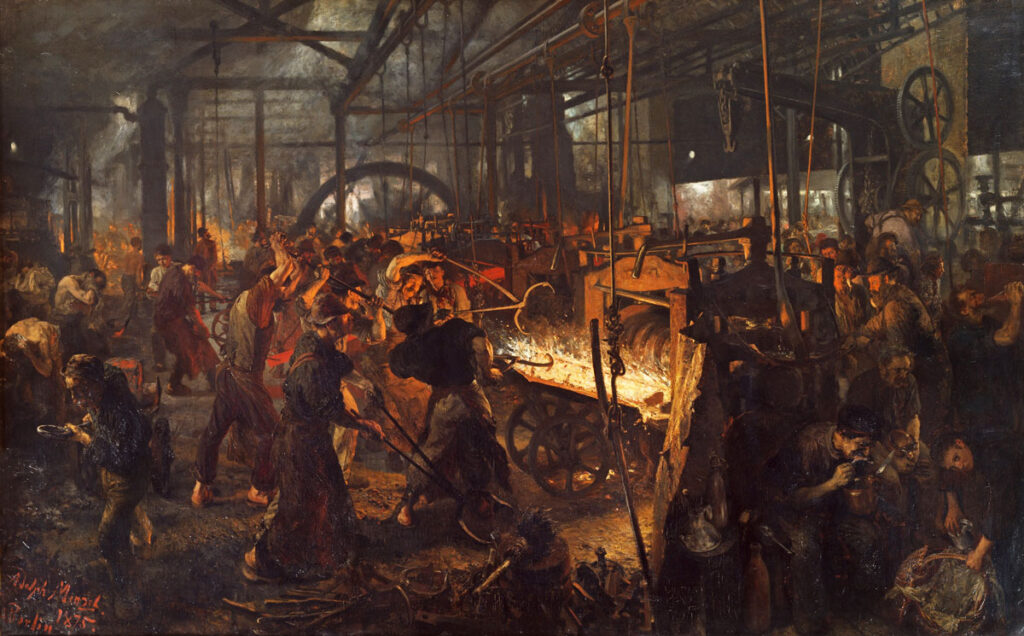
We have this curious juxtaposition of high culture, and, by its side, the worst possible kind of slums; and we have been going on with this, not noting the contrast, except once in a while, and then by a few only.
There is a ghastly tragedy going on all around us, so ghastly that no single one of us can separate himself from it now. Suppose you are horror-struck at all the conditions that you read of in sweatingdens, suppose you have plenty of money, and say, “I will have nothing to do with it, I will go to the most expensive shops for what I want, for surely then I shall be free of this curse of sweating and of responsibility for all the slum conditions;” yet you can purchase nothing which has not the taint of some miserable room, where a woman or child has not been sweated while doing some piece of the work. These are the conditions to-day.
Again, too, in our civilisation we find an impurity, not so much moral impurity, but a material impurity of adulteration; so much so that we hardly know whether we are getting true things or true and false things mixed together when we make our purchases; adulteration is a part now of civilisation, East and West. It is not especially the blame of any one trade, it is the blame of this whole civilisation which has arisen in such a way that men have had given into their hands power over nature, whether they were morally fit or not to have that power. Then look, too, at the conditions everywhere where science has gone with its machinery; truly it has almost abolished some diseases, but only to bring to our attention new ones; it has enabled us to understand the laws of sanitation, but, on the other hand, such strength has science given to the spirit of competition, that Beauty—where is it now? Look at our fields, and see the advertisements that disfigure them; there is everywhere noise, restlessness, an “uglification” as Alice in Wonderland put it, of all life. And these are the condition in which we live, that have given us peace!
Now, they have said in the East for many ages that “the tears of the poor undermine the thrones of kings.” For we live not in two worlds—one of matter and the other of Spirit—but in one world; there is but on Will at work, the Spirit of God, and that Spirit of God is, too, the Spirit of man; and when these ghastly conditions of civilisation appear, then it is that the World Spirit on its upward way breaks the conditions, and we call that breaking War. We have talked so much of the blessings of peace, but I remember what Tennyson wrote over fifty years ago about peace:—
Why do they prate of the blessings of Peace?
We have made them a curse,
Pickpockets, each hand lusting for all that is not its own:
And lust of gain, in the spirit of Cain, is it better or worse
Than the heart of the citizen hissing in war on his own hearthstone?

Peace sitting under her olive, and slurring the days gone by,
When the poor are hovelled and hustled together, each sex, like swine,
When only the ledger lives, and when only not all men lie;
Peace in her vineyard—yes !—but a company forges the wine.

And the vitriol madness flushes up in the ruffian's head,
Till the filthy by-lane rings to the yell of the trampled wife,
And chalk and alum and plaster are sold to the poor for bread,
And the spirit of murder works in the very means of life,

And Sleep must lie down armed, for the villainous centre-bits
Grind on the wakeful ear in the hush of the moonless nights,
While another is cheating the sick of a few last gasps, as he sits
To pestle a poisoned poison behind his crimson lights.

When a Mammonite mother kills her babe for a burial fee,
And the Timour-Mammon grins on a pile of children's bones,
Is it peace, or war? better war! loud war by land and by sea,
War with a thousand battles, and shaking a hundred thrones.
We have such a war now, shaking a hundred thrones, because that which we have called “civilisation” is the most uncivil thing that we have in life; and also, further, because the great World Spirit is being re-born, and there is excess of Life, so that the Life within bursts the outer forms. That is War.
We must be thankful that this war has come to shake to its foundations all civilisation. Yet when this war is over, we shall not begin our full, true civilisation; that will not be yet, for one simple reason. We know now something of the evil of armaments, of the way that the ambitions of nations bring humanity to a tragedy; our conscience is awake to that side of the problem; but is our conscience awake to the tragedy of poverty? Not yet; and we want many other wars before there can be a real peace that satisfies the heart of man. The moment this war is over, does not everyone see the ghastly war that is going to take place between capital and labour? We have had the beginning of another war—that between men and women for the vote; it is for the moment suspended. But that war has to be resumed, for how can you have a great civilisation so long as there is any restriction of the Spirit of God that works equally in the woman as in the man? And there are other wars looming—wars between the coloured and the white peoples, for instance. These will all burst around us and no one can prevent them. Why?
Because, wherever there is war, the great Spirit of Life is striving for greater advance; it is because there is a brighter dawn for all men that we go through a night of hell. Had we only used rightly the power given to us, there would have been no need for the night of horror; but we have put trade before love, economics before beauty, and so we reap as we have sown. So there are struggles yet to be in the future.
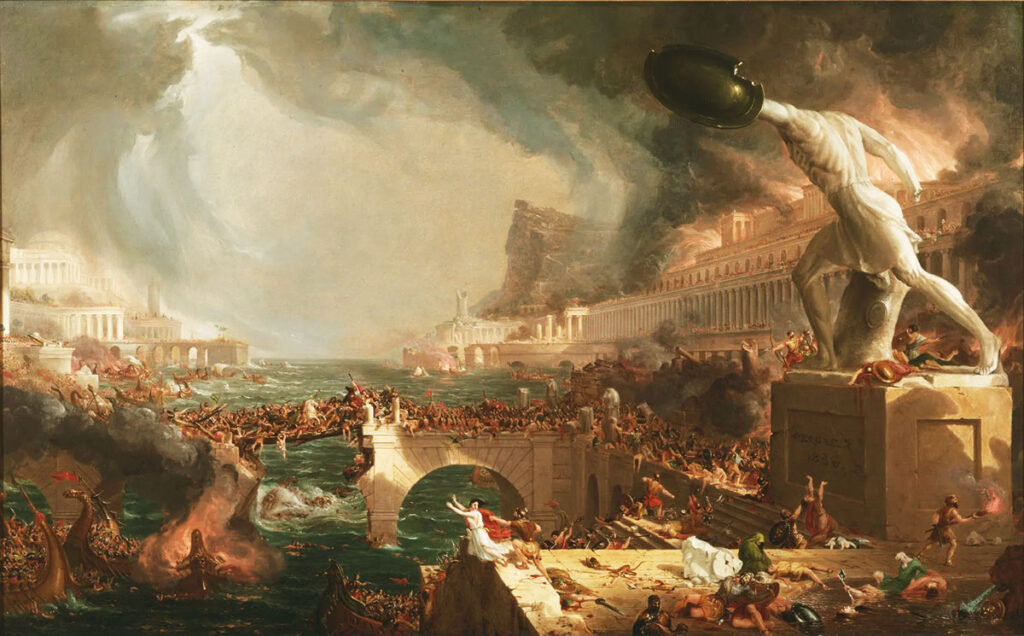
[…] it is because there is a brighter dawn for all men that we go through a night of hell.
Now, we say in our Order that these things are happening and will happen, because the world is being prepared to listen to a Messenger who shall put all civilisation and all men on a true foundation; that all civilisation is being shaken now, and will be shaken in the years to come, because of His coming. For after that shaking, we say, men’s consciences will have become acutely sensitive, so that when the Messenger comes to the world—One who is all Wisdom, the real Prince of Peace—men will listen to what He has to teach them, and there will then no longer be war.
What will be His message to the world then, so that there shall no longer be war? It will not be the old message of religion, for what has religion done for us in this world crisis? Where were all the great religious teachers to-day, both of the East and of the West, when war broke forth? Why did they not prevent it? Religions in these days suffices for the individual’s life, but not for the larger life of nations. You cannot say that England with Christianity, is really a Christian country; neither can I say that India, with Hinduism, is a truly Hindu country; there are too many horrors everywhere that mar the spirit of religion. And yet we all know that religion has helped many a man to light and life and achievement, and still does; but, as a force in the world, religions of the old type that preaches to us of God, with the old idea of God, has no longer an influence over our lives. Obviously, then, He who comes must give us a message slightly different. Now, what type of message will He give? Not a new message, fundamentally; His message is as old as the hills, but it will come with a newness of beauty to each who listens and tries to live it; and it is the old, old message that men are really brothers. We have all heard that, but we have not believed it except with our minds, we have not tried to live it except with our lips, most of us.
There is dawning on the world a realisation that there is a spiritual aspect of life other than the mere worship of God. It is the realisation of all individuals as inseparable units in a great fraternity. It is this thought that is going through the world, inspiring the Socialists, the philanthropists, and those who talk of a Federation of notions and empires. Now, what is at the back of that thought? The greatest reality of existence! That is what underlies the great civilisation that is coming. It means that the wisdom, power, and inspiration we want to reconstruct civilisation with are here, not far away, not with God in heaven, but by our side, in the man, woman, or child who stands next to me—in my Brother! If you will look into the face of the man that you see next to you and say to yourself, “Brother, thou art I”; if you will say it, even though it is only a mere phrase; if you will go through the world inwardly saluting each one you meet as a mirror of what you seek—the great life of God, or the life of Divine Unity, or the Power of your ideal of Love or Beauty, it matters not which—see then whether the load of misery that is yours is not a little less, whether, in your weakness, there is not a little strength. Put it to the test. It is not a mere beautiful sentiment, it is power to-day for you and for me. For God speaks to man, comes nearer to him, in many forms; once upon a time, in ancient India, it was as God the Creator, God the Preserver, and God the Destroyer; later, in Christian times, it was as God the Father, God the Son, and God the Holy Ghost. Once again He appears to men, but not as the God of ancient days; He appears now as God our Brother Man. In our brother man is all the Wisdom, all the Joy, all the Beauty of the ages; in his thoughts and in his glances is all the mystery of life that the philosopher and the artist have dreamed of, all the strength with which every strong man has achieved in the past. In the man or woman or child by your side is the wisdom for the scientist, the statecraft for the king, the ecstasy for the saint, the love-dream for the lover. What all the greatest among us have known of God in the past—in temple or hermitage, in cathedral or chapel, in the presence of mountain or of sea, rapt in the sunset or in the symphony—all the glory and not less, God’s glory and not man’s, is ready to flash its message to you from your Brother Man. God seeks us as we seek Him; but His new way of His search of us is through our Brother Man.
O God of mountains, stars and boundless spaces,
O God of freedom and of joyous hearts,
When Thy face looketh forth from all men's faces,
There will be room enough in crowded marts;
Brood Thou around me, and the noise is o'er,
Thy universe my closet with shut door.
That is the great message that is coming, the message that the world longs to hear. Is there a single heart in the world to-day that does not respond to that message of the future? But we lack one thing; we all feel something of the power of Brotherhood; we all feel God in man now and then; perhaps in an individual that we love flashes something of His message; but who will teach us to see God in every man, woman and child that we meet? There is no living teacher who can initiate us into that Mystery. That is why we, like the Wise Men who saw the mystic Star in the East, say that there is One coming, the Brother of all men, and that He comes to all men to teach them the wonder of God in Man.
Because in His nature are summed up all the hopes and aspirations, all the misery and weariness of all men, He stands forth as the Brother of all men; and because He so stands forth, summing up Humanity in Himself, He is Very God of Very God; for when you have perfect Manhood, then you have perfect Divinity too; and it is because of His utter Manhood that He has the power to achieve all things for the world when the world is ready for Him. And He waits now, watching this war of the world, and watching too the other wars to come, till all men shall realise that so long as there is one man, woman or child who is miserable, suffering, or ignorant, because of human conditions, there, then, are all the brutalities of war. For he comes to the world for Peace and not for War, and men must be ready to accept the Peace He brings. And yet, even now, it is He Who give the peace in the heart of the warrior; there are warriors to-day who go forth with courage and determination and sacrifice their lives, saying “What matter if I die, if only my children are freed from this horror!” The peace that comes in the heart of these soldiers is real peace, and it is give by the great Brother of all men. There will, indeed, be an ending of war when comes the great Prince of Peace, who will still the wards in our own hearts first of all; till we can go through life and look on all things and not feel a war in our hearts. what use to have a mere outwards peace?
Until He comes, then, we must be warriors, warriors with unsheathed swords, to fight against poverty and against all the things that limit the great life of man and of God; and when, after we have so fought our battle and are ready to sheath our swords, then He will show us how to reconstruct all life, so that there will never be any more war. He will show us by teaching each of us how to be a Brother; and as we stand in His presence we shall learn how to stand, as He does, to all men, how to look through the faces of our brothers and see the real Soul through the colour of the skin, though the sex of the body; and to know that the Soul that we see in each man is that Highest that is within us too. he will teach us these things not so much by sermons as by His very Presence.
His message is, then, that if He is to come soon, we must first go forth warring—warring withing the nations in one department of life after another; and this warfare must go on until we abolish every disqualification that stand in the way between man and woman, between the rich and the poor, between the West and the East, and every disease and every evil, till we bring the world into a condition of things where there is something of real Brotherhood. That is our dream of the future.
Now comes the great privilege to all who will listen. It is that even in this state of warfare it is possible to those who listen to have the great Prince of Peace Himself standing by their side, guiding the fight. He is the Prince of Peace, yes, but He is also the Christ militant. He always ushers in the new life, but sometimes, when conditions limit the life of God, these conditions have to be broken; but He will guide you how to work in the reconstruction, so that there will be peace truly coming as the result of your labours, and not confusion. That is why we have gathered ourselves together into a little land; the Brothers of the Star we call ourselves, and we believe that as, in His Name, we try to understand the world problem, and each problem of poverty and misery, we do see a little more light upon our way and that we are preparing the great civilisation to come.
Now, every one of you wants something of peace, the peace that shall end the heartache, the peace that shall abolish the darkness of ignorance, the peace that shall give you something of the realisation of God; a thousand and one ways of peace we all desire. There is One who can give you that Peace, if only you will try to be a Brother to all men “in His name.” Go forth to-day from this hall, and in the name of Someone of whom you have heard to-day, whom you have not felt perhaps, yet, in His Name, when somebody irritates you or injures you, try to smile, try to be understanding and compassionate; when you see anyone suffering, try to relieve that suffering, in the name of this Someone; try to do that, and see whether, mysteriously, there does not come into your heart a greater peace, whether, slowly, you do not feel an invisible Presence inspiring you and giving you strength.
The world needs Strength and Wisdom, and all that is required of both is for the world’s asking, if only we will look not so much to God, but more to Man. It is this gospel of our God our Brother Man that we need to realise in these days; it is not so hard to realise if you will only try and look in the right direction; then, in every man, woman and child, you will see the great God that your heart longs for, flashing. There is a dawn coming to all Humanity that shall mean, indeed, a heaven upon our earth; it is because that dawn is inevitable that we have the wars to-day and to come, for the great World Spirit is striving for self-realisation; but unless you and I do our part of the work, the great future is delayed—delayed, though not made impossible; for if you and I will not do the work, we are cast aside, and the work will be accomplished through others; but whose then will be the joy? But if you and I will wage the war against evil, then comes the Spring, and the Winter end. These are the days of men’s winter, but there is always Spring, always a fuller Life growing, and making greater Beauty in our hearts, weaving new soul-vestures. The joy of life is always to feel Springtime and its wonders.
To feel that you are ageless, that you stand in a full vigour of spiritual existence—that is the possibility for every man, woman and child to-day, irrespective of education, irrespective of his lot in life. There is not a little child who, if he could but be taught something of the World-Teacher to come, may not feel a greater joy in life, who would not feel while he plays a Divine Child playing by his side; there is not an artist, who if he understood, may not find a greater Artist beside him; and there is not a statesman who may not feel a wiser Statesman to guide his policy; and not a king who may not know a more royal King to whom to bow the knee.
This is the invisible and mighty fact, that we stand on the threshold of wondrous events for Humanity, which, in their beginning seem, indeed, ghastly. But after the initial overture of tragedy, there comes the great Song of Life. It is that Song of Life that you may all hear now, that Song which has already begun; and we stand to-day to make you listen to the opening bars of that Song, so that as you listen you shall hear other melodies too—nay, so that you yourself shall weave you own melody into that Song. For there comes a Prince of Peace, of Beauty and of Power, and He comes not with darkness but with Light, not with sadness but with Joy, singing His mighty Song composed for Him by God. To listen, and to learn to weave your little song into His mighty Song—that is the message to you of the Brothers of the Star.
¹ Jinarājadāsa, Curuppumullage. The Message of the Future. (London: Theosophical Publishing House, 1916).

Post a comment